
The Gap Between Healthcare Innovation and Real-World Delivery
There is a lot of conversation around healthcare innovation: AI, digital health, advanced imaging, personalized medicine.
But a recent experience in A&E made me think about the gap between innovation and delivery.
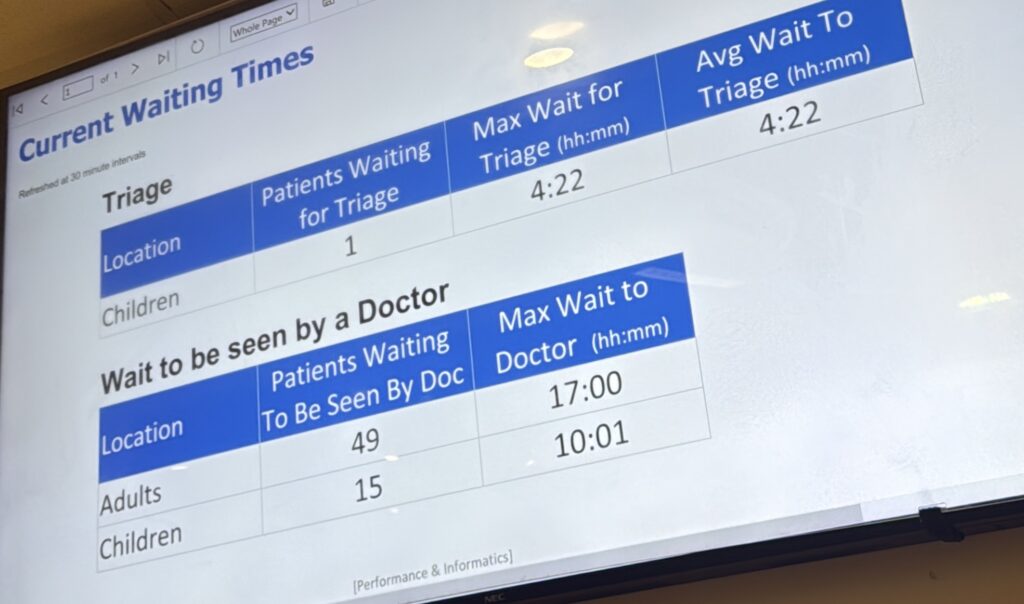
Crowded waiting rooms.
Long waits.
Staff under visible pressure.
Patients trying to understand what happens next.
At one point, I found myself moving between staff members just trying to understand the next step in the process.
It made me think about how we are making significant advances in healthcare behind the scenes.
But what is the reality on the frontline?
Because for many patients, this is healthcare.
Not the innovation pipeline.
Not the strategy discussions.
Not the future we are building.
But the experience of waiting, navigating systems, and interacting with a service under strain.
This isn’t about criticising anyone. Healthcare professionals are working under immense pressure, and that is clear the moment you step into A&E.
But it raises important questions:
How do we meaningfully talk about advancing healthcare if the point of care itself is struggling?
Where is the connection between innovation and real-world delivery?
The future of healthcare depends not only on what we build, but on whether our systems can deliver it. Because if the frontline is under strain, improvements elsewhere risk not translating into better patient outcomes.
For many patients, the future of healthcare isn’t what is being built. It is what they experience when they walk into A&E.
The gap between healthcare innovation and healthcare delivery may be wider than we think.
Written by Sabrina Sangha
sabXplores